430 E 20th St Suite # MH, New York, NY 10009
By Stuyvesant Dental | May 15, 2026
Most people know the basics of oral hygiene:
- Brush twice a day
- Floss regularly
- Visit the dentist periodically
But despite these habits, many patients still develop cavities, gum inflammation, tooth sensitivity, and other dental issues over time.
Why?
Because oral hygiene is about more than simply brushing your teeth quickly before work or flossing occasionally before a dental appointment.
At Stuyvesant Dental Manhattan, Dr. Jasjit Basra and Dr. Harry Pascal often help patients across Manhattan, Gramercy, East Village, Union Square, and the Lower East Side improve small daily habits that can make a major difference in long-term oral health.
The reality is that many dental problems are preventable—and understanding what your dentist wishes you knew can help protect your smile for years to come.
Oral Hygiene Is About More Than Fresh Breath
Many people associate oral hygiene mainly with:
- Fresh breath
- Clean-looking teeth
- Cosmetic appearance
But oral health affects much more than aesthetics.
Poor oral hygiene can contribute to:
- Cavities
- Gum disease
- Tooth loss
- Chronic inflammation
- Overall health concerns
Your mouth is connected to the rest of your body, and healthy habits play a major role in maintaining overall wellness.
Common Oral Hygiene Mistakes Manhattan Patients Make
Even patients who brush consistently can unknowingly make mistakes that impact their oral health over time.
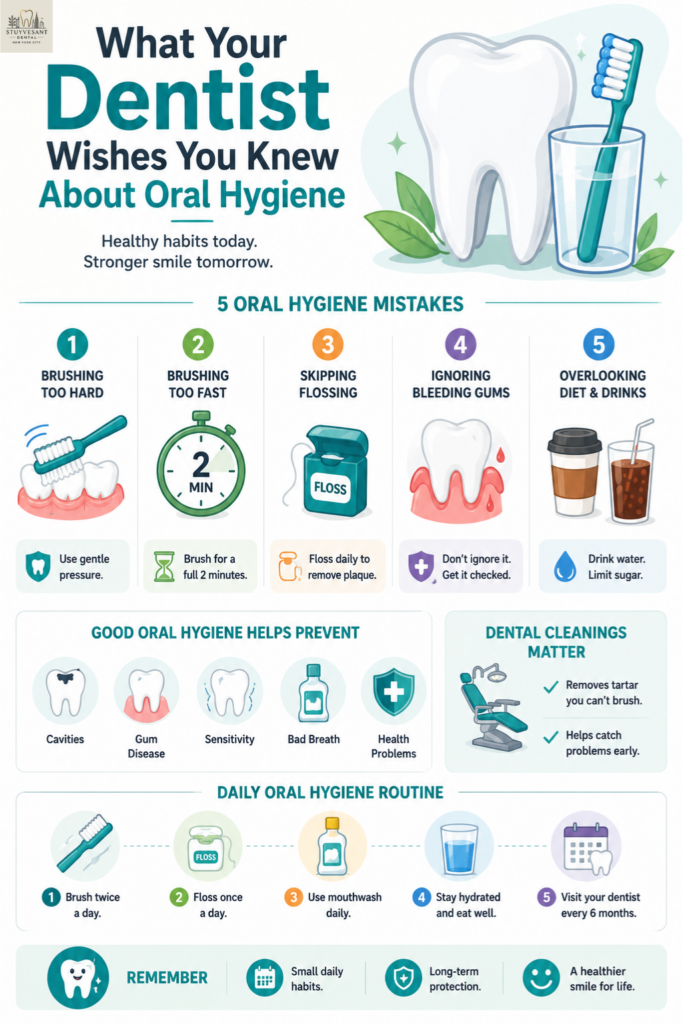
1. Brushing Too Hard
One of the most common mistakes dentists see is aggressive brushing.
Many people believe brushing harder cleans better, but excessive force can:
- Wear down enamel
- Cause gum recession
- Increase tooth sensitivity
Better approach:
Use gentle circular motions with a soft-bristle toothbrush.
The goal is effective plaque removal—not scrubbing your teeth aggressively.
2. Brushing Too Quickly
Busy Manhattan schedules often mean patients rush through brushing in under a minute.
Dentists generally recommend:
- Brushing twice daily
- For a full two minutes each time
That extra time helps ensure every surface is cleaned properly.
Whether you’re heading to work in Midtown or commuting from the Financial District, slowing down your brushing routine can have a meaningful impact.
3. Ignoring Bleeding Gums
Many patients assume bleeding gums are normal.
They’re not.
Bleeding gums can be an early sign of:
- Gingivitis
- Gum inflammation
- Early gum disease
The earlier these issues are addressed, the easier they are to manage.
Ignoring them can allow the condition to worsen over time.
4. Skipping Flossing
Brushing alone does not clean between teeth effectively.
That means plaque and bacteria can remain trapped in areas your toothbrush can’t reach.
Skipping flossing increases the risk of:
- Cavities between teeth
- Gum disease
- Persistent bad breath
Patients across neighbourhoods like Chelsea, East Village, and Gramercy commonly admit that flossing is the first habit to disappear during busy weeks.
5. Underestimating the Impact of Coffee and Acidic Drinks
In NYC, coffee culture is part of everyday life.
But frequent exposure to:
- Coffee
- Soda
- Wine
- Energy drinks
can gradually affect enamel and increase staining.
Acidic beverages may also weaken enamel over time.
Helpful tips:
✔ Drink water regularly
✔ Avoid sipping acidic drinks all day
✔ Wait before brushing after acidic foods or drinks
Why Routine Dental Visits Matter
Even excellent home care doesn’t replace professional dental care.
Routine exams and cleanings help:
- Remove hardened tartar
- Detect problems early
- Monitor gum health
- Prevent more serious dental issues
Patients receiving regular dental cleanings NYC services often experience fewer long-term oral health complications because small problems are caught earlier.
Oral Health and Overall Health Are Connected
Research continues to show connections between oral health and overall wellness.
Poor gum health has been linked to:
- Inflammation
- Heart disease
- Diabetes complications
This is one reason preventive dental care is so important.
Your oral health affects more than just your teeth.
What Your Dentist Really Wants You to Understand
Many dental issues develop slowly and quietly.
By the time pain appears, the problem may already be advanced.
Dentists want patients to understand that:
- Prevention is easier than treatment
- Consistency matters more than perfection
- Small habits add up over time
A few extra minutes each day can significantly reduce the risk of future dental problems.
How to Improve Your Oral Hygiene Routine
The good news is that improving oral hygiene habits is often simple.
Helpful daily habits include:
✔ Brushing twice daily
✔ Flossing once daily
✔ Using fluoride toothpaste
✔ Staying hydrated
✔ Replacing toothbrushes regularly
✔ Limiting sugary snacks and drinks
Consistency is the foundation of long-term oral health.
Oral Hygiene Challenges in Manhattan
Life in Manhattan moves quickly.
Patients balancing:
- Long work hours
- Commuting
- Social schedules
- Family responsibilities
often prioritize convenience over preventive care.
But oral health issues rarely improve on their own.
Whether you live in Union Square, Gramercy, East Village, or Lower Manhattan, maintaining strong oral hygiene habits can help prevent more serious dental issues later.
Why Patients Choose Stuyvesant Dental Manhattan
Patients throughout Manhattan trust Stuyvesant Dental Manhattan because of its:
- Personalized care
- Preventive dental approach
- Comfortable patient experience
- Modern dental technology
Dr. Jasjit Basra and Dr. Harry Pascal focus on helping patients build healthier habits while providing comprehensive dental care tailored to individual needs.
Final Thoughts
Oral hygiene may seem simple, but small daily habits have a major impact over time.
From brushing technique to flossing consistency, many patients unknowingly make mistakes that increase their risk of cavities, gum disease, and sensitivity.
The good news?
Most dental problems are preventable with the right habits and regular professional care. Visit us for comforting and personalised care.
For patients across Manhattan and surrounding neighbourhoods, investing a little more attention into oral hygiene today can help protect your smile long into the future.
FAQs
1. How often should I brush my teeth?
Most dentists recommend brushing twice daily for two full minutes each time.
2. Are bleeding gums normal?
No. Bleeding gums may indicate gingivitis or gum inflammation and should be evaluated.
3. Can brushing too hard damage teeth?
Yes. Aggressive brushing can wear down enamel and irritate gums.
4. Is flossing really necessary?
Yes. Flossing removes plaque and bacteria between teeth where toothbrushes can’t reach.
5. Does coffee affect oral health?
Coffee can contribute to staining and may affect enamel over time if consumed frequently.